
Somebody in a compliance
meeting says \”technology control plan\” and half the room just nods
along, hoping nobody asks a follow-up question. Sound familiar? Let\’s actually
sort this out.
To start, the basic idea isn\’t
complicated. Certain technologies, software, and technical data are legally
off-limits to foreign nationals or foreign countries unless someone gets proper
authorization first. A TCP — short for technology control plan — is how an
organization actually puts that rule into practice, instead of just being
vaguely aware it exists. So if you work in research, defense, or anywhere near
export-regulated tech, there\’s a decent chance you need one. Or, more likely,
you already have one and nobody\’s bothered explaining it properly.
With that in mind, this guide
walks through what it is, why it matters, and how you\’d actually build one — no
legal jargon required.
What Is a Technology Control Plan?
The Basic Definition
At its core, this is a written
rulebook. In other words, it spells out how an organization identifies,
secures, and limits access to controlled technology — who\’s allowed near it,
who isn\’t, and how that gets enforced in practice rather than just written down
and forgotten.
Why Organizations Bother With One
Mostly, it comes down to
compliance — specifically with the Export Administration Regulations (EAR) and
the International Traffic in Arms Regulations (ITAR). However, it\’s not purely
a legal checkbox. A decent plan also protects trade secrets, intellectual
property, and, as a result, an organization\’s credibility when something does
go wrong.
Where You\’ll See These Most
Overall, a handful of
industries lean on this constantly:
•
Aerospace and defense
manufacturing
•
Higher education and research
institutions
•
Semiconductor and technology firms
•
Government contracting
•
Cybersecurity and IT services
Why a Technology Control Plan Actually Matters
First of all, without something
like this in place, sensitive technology can end up somewhere it shouldn\’t —
usually not through anything dramatic, just a shared folder nobody locked down,
or an intern given access they didn\’t need.
On top of that, regulators
expect documented safeguards from organizations working with controlled
material. So when an audit happens, having a real plan on file is the
difference between \”we\’ve got this handled\” and a genuinely bad
afternoon.
There\’s also the question of
deemed exports — for instance, sharing controlled technology with a foreign
national even while they\’re sitting in a U.S. office, no shipping involved
whatsoever. A clear access policy heads that off before it becomes a problem.
And honestly, the financial
angle matters too. After all, export violations aren\’t cheap — fines, legal
costs, sometimes worse. Because of that, a written plan is one of the more
reliable ways to keep the risk contained.
How a Technology Control Plan Works Day to Day
To begin with, step one is
figuring out what\’s actually restricted, usually by cross-checking against
something like the Bureau of Industry and
Security database rather than guessing.
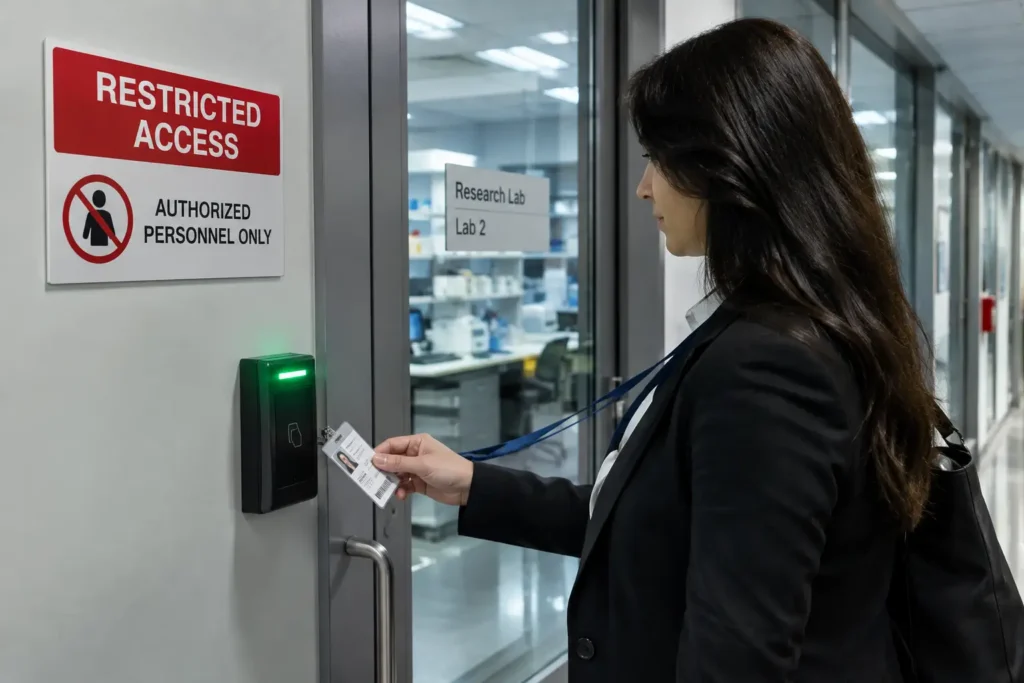
From there, physical safeguards
come into play — badge access, locked labs, rooms set aside for sensitive
equipment only.
Similarly, digital access
matters just as much, arguably more these days. Think encryption, tight
permissions, and secure file transfers. And since so much of this now happens
on laptops and phones, it\’s also worth reading up on how to protect
data on mobile devices.
Beyond that, somebody has to
actually own this — not \”the department,\” but a specific person
accountable for oversight, with clear expectations set for everyone else
touching the material. And a plan that just sits in a drawer isn\’t doing much good;
that\’s why regular check-ins are what keep it honest.
What Goes Into a Technology Control Plan
|
Component |
What |
|
Scope and Objectives |
What the plan applies to, and why |
|
Technology Classification |
Which items count as controlled |
|
Access Control Procedures |
Who gets access, and under what conditions |
|
Data Security Measures |
Encryption, storage, network safeguards |
|
Personnel Training |
Making sure staff actually understand the rules |
|
Recordkeeping |
Logging access and approvals |
|
Incident Reporting |
What happens if something goes wrong |
Even so, smaller organizations
without a dedicated compliance team shouldn\’t assume this is out of reach. For
example, there\’s a decent primer on affordable
small business cybersecurity worth a read if budget\’s tight.
Who Actually Needs a Technology Control Plan
In short, more organizations
than people usually assume:
1.
Universities and research
institutions on federally funded or export-controlled projects
2.
Defense and aerospace companies
handling ITAR-regulated hardware
3.
Tech and engineering firms
building dual-use products
4.
Government contractors and
suppliers
5.
Manufacturers producing
export-controlled equipment
Technology Control Plan vs. Export Control Plan
People swap these two terms all
the time, but they\’re not identical. One tends to look inward — access,
storage, who\’s allowed where. The other, an export control plan, is usually
broader, covering shipping, licensing, and cross-border transactions.
That said, here\’s a rough rule
of thumb: physically shipping goods overseas generally calls for the fuller
export control plan. Meanwhile, if you\’re managing sensitive data mostly
in-house — a university lab, say — a TCP usually covers it.
How to Actually Build a Technology Control Plan
To keep things simple, nothing
here needs to be overcomplicated:
6.
Work out which regulations
apply — EAR, ITAR, or both.
7.
Catalog what\’s controlled —
everything, not just the obvious stuff.
8.
Write the actual procedures
— physical rules and digital ones.
9.
Train people properly — not
a five-minute email nobody reads.
10.
Revisit it regularly —
since rules shift more than most people expect.
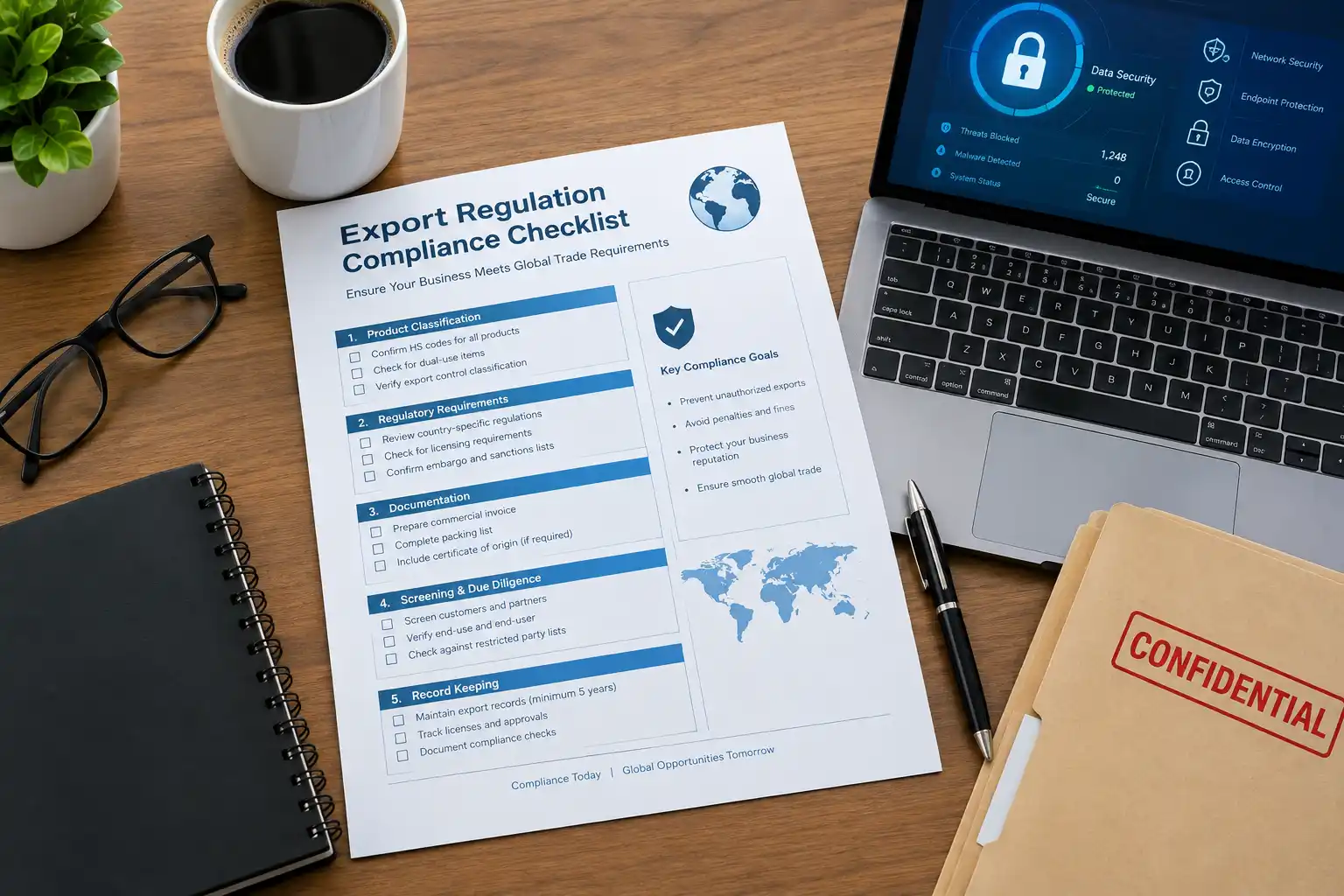
Additionally, for license
applications and classification lookups, the DECCS portal is genuinely worth
bookmarking.
Where Things Usually Go Wrong
Even well-run teams trip up
here, and it\’s rarely one big failure — instead, it\’s usually a few small ones
stacking up:
•
People not realizing something
they\’re handling is even controlled
•
Remote work making digital
safeguards harder to enforce consistently
•
Regulations changing faster than
anyone\’s actually tracking
•
Documentation that quietly goes
stale

What Separates Technology Control Plans That Hold Up
•
Regular audits of access logs, not
just a yearly glance
•
Real cybersecurity basics done
properly — encryption, MFA
•
Access based on need-to-know, not
who happens to ask nicely
•
Scheduled compliance reviews
instead of reactive ones
Technology Control Plan Mistakes Worth Avoiding
•
Treating training as a formality
and skipping it
•
Access controls that are loose or
inconsistent
•
Documentation nobody\’s touched in
years
•
Sloppy recordkeeping
•
Writing the plan once and never
opening it again
Final Thoughts
In the end, this is about
protecting what actually matters-the research, the IP, an organization\’s
standing with regulators.. It identifies what\’s sensitive , limits who can
reach it, and, as a result, keeps people accountable along the way.
That said, it\’s not something
you write once and file away. Regulations move, teams change, and technology
evolves faster than most policies keep up with. Because of that, the
organizations that stay out of trouble tend to treat this as something living,
not a binder gathering dust on a shelf somewhere..
So, if it\’s been a while since
anyone looked at yours, that\’s usually the sign..
Frequently Asked Questions
Technology Control Plan Basics
What is the purpose of a Technology Control Plan?
Basically, it\’s there to keep
controlled technology and technical data away from people who aren\’t cleared to
see it, while also keeping the organization on the right side of U.S. export
laws..
Who is required to have one?
Universities, defense
contractors, tech firms-essentially anyone handling export-controlled material.
That said, even smaller companies
without a formal legal team tend to benefit from having something in writing,
even a simple version..
What regulations require it?
Mainly the EAR and ITAR. Which one applies-sometimes both-depends on
the actual technology involved..
What should be included?
Scope, technology
classification, access controls, security measures, training, recordkeeping,
and a process for reporting incidents when they happen.. That said, not every
plan needs to be a 40-page document – it just needs to actually cover these
bases..
How often should it be updated?
Once a year at minimum..
Sooner, though, if regulations change, or if the technology itself changes,
which happens more often than people plan for..
Technology Control Plan Definitions and Examples
What\’s an example of a control plan?
Picture a university lab that
restricts foreign national access to a piece of controlled equipment, with
badge-entry rooms and encrypted storage on top.. In fact, that\’s a fairly
standard setup, and one you\’ll see a version of almost everywhere this applies..
What are examples of controlled technology?
Certain encryption software,
for instance. Also aerospace design data, semiconductor manufacturing
equipment, and specialized military hardware specs. Overall, the list is longer than most people
expect.
How is technology control defined?
Essentially, it\’s the systems
and procedures an organization uses to limit who can reach sensitive technology
, based on how it\’s classified and whether someone actually needs access.
What is a controlled technology?
Any technology, software, or
technical data that\’s restricted from export because of its military, security ,
or strategic value-that\’s the short answer, anyway.
How does technology export control work?
Put simply, it\’s the legal
framework that governs how technology and technical data can – or can\’t-be
shared or exported outside the U.S..